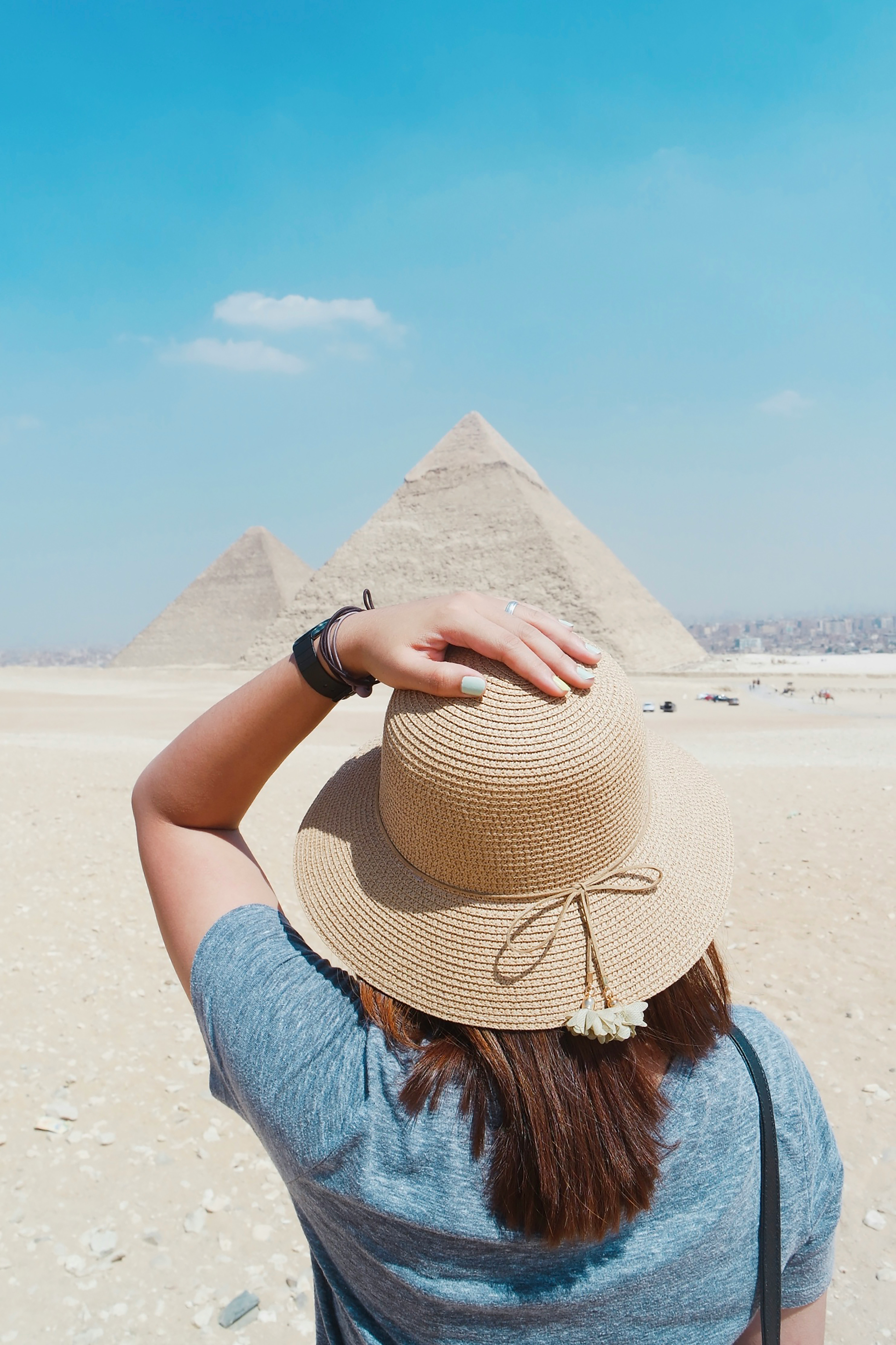
The Weight of Historical Continuity & Unbroken Civilization
Egypt stands uniquely as humanity's longest continuously inhabited civilization, with documented recorded history stretching back nearly 5,000 years to King Narmer's unification of Upper and Lower Egypt around 3100 BCE. This temporal span dwarfs Western civilization's age; Rome's empire lasted 500 years comparatively. Egyptians developed written language, monumental architecture, sophisticated governance, and spiritual philosophies while other cultures remained preliterate. Walking through temples carved during pharaonic times, then through medieval Islamic Cairo's intricate mosques, into neighborhoods housing contemporary Egyptians creates visceral awareness of historical layers and human persistence through millennia of transformation. Few places on Earth offer such transparent access to humanity's journey from ancient kingdoms through numerous conquests and cultural shifts to contemporary nationhood. The continuity proves humbling: a modern Egyptian might live in a Cairo neighborhood neighboring a temple built 3,400 years ago, with their ancestors perhaps performing rituals in those exact precincts. This collapsing of time creates profound perspective on civilization's resilience and humans' fundamental needs for shelter, spirituality, community, and meaning remaining constant across vastly different eras.
Pharaonic Genius: Engineering Mysteries & Architectural Immortality
Ancient Egyptians engineered structures and systems of such sophisticated brilliance that 21st-century scientists with advanced technology struggle comprehending construction methods using primitive copper tools, wooden sledges, and human muscle. The mathematical precision embedded in the Great Pyramid's dimensions (sides aligned to cardinal directions within fractions of degrees, slope angles calibrated with impossible accuracy) suggests astronomical and surveying knowledge rivaling modern capabilities. The Karnak Temple complex's architectural harmony, achieved across 13 centuries as successive pharaohs added sections without disrupting overall aesthetic unity, demonstrates organizational genius and aesthetic sensibility refined across generations. The engineering required managing thousands of workers, coordinating quarrying operations, transporting multi-ton blocks across deserts without wheeled vehicles, and positioning them with precision that modern engineers acknowledge as sophisticated. These monuments reflect not primitive societies struggling with basic construction but refined cultures with advanced understanding of engineering, mathematics, astronomy, and spatial visualization. Egyptologists debate whether Egyptians possessed ancient computers, understood advanced surveying techniques, or possessed innate mathematical genius translatable across millennia. Encountering these structures in person rather than through photographs creates profound cognitive dissonance: how could people without modern technology accomplish these feats? This dissonance, when sustained, generates appreciation for human capability before industrialization and respect for ancient intelligence fundamentally equal to contemporary minds but directed toward different purposes and possessing different knowledge domains.
Spiritual Philosophies Crystallized in Stone & Hieroglyphic Narrative
Egyptian temples and tombs embody sophisticated spiritual philosophies regarding death, afterlife, divine kingship, cosmic order, and human purpose that profoundly shaped Western civilization through Greek adoption and subsequent theological development. Hieroglyphic inscriptions visible throughout tombs and temples reveal complex religious narratives including the Book of the Dead (collection of spells ensuring safe afterlife passage), protective formulas against supernatural threats, and affirmations meant to ensure pharaonic immortality and divine favor in eternal realms. The Egyptian concept of ma'at (cosmic order/justice/balance) manifested through pharaonic duty to maintain universal harmony through proper ritual and governance; failure to uphold ma'at brought chaos and divine punishment. This spiritual framework, though scientifically inaccurate, demonstrates ancient humans grappling with fundamental existential questions: What happens after death? How should humans live morally? What responsibilities do leaders hold? How does the cosmos function? Encountering these ancient spiritual expressions in person—reading hieroglyphics describing the pharaoh's hoped transformation into celestial bodies, observing painted scenes depicting the journey through the duat (underworld), understanding the psychological comfort these beliefs provided facing mortality—creates profound understanding of how humans throughout history have grappled with mortality, transcendence, and meaning. The sophistication of Egyptian spirituality, matching contemporary theological systems in complexity while differing in content, demonstrates that spiritual seeking remains fundamental to human consciousness across cultures and millennia. Visitors contemplating these monuments often report transformative experiences where ancient Egyptian spirituality, though intellectually rejected, emotionally resonates with modern existential anxieties, creating unexpected psychological bridges across millennia.
Tutankhamun's Treasures: Death's Secrets Revealed & Artistic Mastery
King Tutankhamun, ascending to Egypt's throne around 1332 BCE at age 9 and dying mysteriously at 18, possessed minimal historical significance during his brief reign. However, his tomb's discovery in 1922 by Howard Carter revolutionized Egyptology and public fascination with ancient Egypt. The tomb contained over 5,000 objects: golden funerary masks of extraordinary artistic refinement, nested coffins of wood and precious metals, furniture, weapons, games, clothing, cosmetics, and food provisions for the afterlife. Tutankhamun's famous golden death mask, crafted from solid gold with inlaid lapis lazuli and carnelian, represents the pinnacle of ancient Egyptian goldwork; its serene expression and perfect proportions embody ideal pharaonic beauty. The mask's discovery made Tutankhamun's face recognizable across modern culture, transforming an obscure historical figure into tourism icon. DNA analysis of Tutankhamun's remains revealed malformations suggesting genetic problems from royal incest, humanizing the young king beyond his monumental treasures. Recent CT scans of his mummy revealed severe club foot and evidence of genetic disease, suggesting he received massive support to remain mobile enough for royal ceremonies. Examining Tutankhamun's belongings—his decorated game board, ornate sandals, fine linens, and cosmetics—illuminates daily royal life beyond ceremonial grandeur. The artifacts demonstrate that even child-kings received extraordinary craftsmanship and luxury, reflecting both love and enormous resources devoted to preparing for eternal existence. Modern visitors viewing Tutankhamun's treasures in Cairo's new Grand Egyptian Museum experience profound encounters with mortality and human finality; despite pharaonic efforts achieving immortality through elaborate preparation, Tutankhamun ultimately became dust like all mortals, his treasures surviving only through historical accident. This paradox—enormous effort invested in overcoming death resulting only in archaeological preservation—creates poignant reflection on human mortality and legacy.
Living Egypt: Contemporary Culture & Continuity with Ancient Heritage
Modern Egyptians carry ancient heritage with pride, maintaining customs, linguistic patterns, and cultural practices with roots extending millennia backward. Egyptian Arabic dialects preserve phonetic patterns and vocabulary modified by ancient Egyptian and subsequent languages (Coptic, Greek, Arabic, Turkish), creating linguistic archaeology in daily conversation. Egyptian cuisine incorporates ingredients used since pharaonic times: fava beans (fūl), bread baked in communal ovens, dates, figs, and beer consumed essentially unchanged across 5,000 years. Family structures emphasizing patriarchal authority, extended kinship bonds, and collective decision-making reflect values embedded in ancient Egyptian society documented in tomb scenes and written records. Hospitality customs offering mint tea and sweets to visitors, mourning rituals, and marriage celebrations perpetuate behaviors documented in ancient texts. Interacting with contemporary Egyptians, particularly outside tourist spaces in neighborhoods, villages, and markets, reveals continuity between ancient and modern as natural expression of cultural identity rather than historical artifact preserved for academic study. A modern farmer irrigating fields using techniques unchanged from pharaonic agriculture participates unknowingly in civilizational continuity. An elderly Nubian woman selling textiles using patterns her grandmother's grandmother learned hundreds of years ago maintains cultural transmission. An imam reciting Quranic verses in a mosque built adjacent to a pharaonic temple connects Islamic and earlier spiritual traditions. This living continuity, visible to observant travelers, demonstrates that Egypt's grandeur extends beyond monuments into the daily practices, values, and consciousness of contemporary Egyptians, making the country a living civilization rather than archaeological museum of dead cultures.